Insights
How to run a freight forwarding business on Odoo.
From quote to customs to margin — one Job Order record instead of five spreadsheets and a prayer.
19 July 2026 · By Muhammad Salman Ali Khan · Knova Digital Solutions
Walk into most freight forwarding offices and you will find the same setup: quotes in Excel, job files in folders, customs calculations in one senior person's head, WhatsApp threads with transporters, and nobody able to say — today — which jobs actually made money last month. The business runs, but it runs on memory and heroics.
Odoo can fix this. But not out of the box — and anyone who tells you otherwise has never cleared a container. Here is how it actually works, and where our custom freight module comes in.
What standard Odoo gives you — and where it stops
Out of the box, Odoo handles the business around the freight: CRM for enquiries, quotations, invoicing, accounting, payroll. What it does not have is the operational heart of forwarding — there is no concept of a job with legs, containers, customs, and third-party costs. Standard Odoo does not know what a Bill of Entry is, cannot compute duty on CIF, and has no idea your container has been sitting at the port for nine days.
That gap is exactly what our Freight & Pallet Management module fills. We built it inside Odoo — so operations, sales, and accounting stay on one system — and shaped it around how forwarders in the UAE and GCC actually work.
The workflow: one Job Order, start to finish
- 1. Enquiry to quote. Leads land in CRM and route automatically to your air, sea, or land sales team. Quotes price from rate cards — your customer rate and your transporter cost side by side — so margin is visible before you commit, not after.
- 2. Quote to Job Order. Won quote becomes a Job Order — the single record that carries the whole shipment: parties, cargo, legs, documents, costs, revenues, and status. No re-typing, no parallel files.
- 3. Multi-leg planning. Pickup by truck, sea leg, customs, final delivery — each leg planned on the job with its own carrier, dates, and cost. Drivers and trucks are scoped by transporter, with availability checks so you never double-book.
- 4. Pallet-level costing. For LTL and groupage, the module costs at pallet level with size-based splits — so shared-load pricing stops being guesswork.
- 5. Customs and VAT. HS-code master, duty computed on CIF, VAT on CIF plus duty, FTA flags, Bill of Entry, and UAE specifics like Mirsal 2 declarations and free-zone tax positions — calculated by the system, not by whoever is in the office.
- 6. Demurrage and free time. The module tracks free days per container and starts the clock automatically. When demurrage accrues, billing is one action — instead of a dispute three weeks later.
- 7. Customer updates without the phone tag. Status changes trigger WhatsApp and email notifications, and customers track their shipments on a public portal. Fewer "any update?" calls, more trust.
- 8. Finance closes the loop. Invoices generate from the job — customer charges, transporter bills, duties — so accounting reconciles against operations instead of chasing it.
What management finally sees
Because every dirham of cost and revenue lives on the job, profitability is real-time: by job, by customer, by mode, by destination. The Customer 360 view shows volumes, revenue, and lanes per client — who deserves better rates, and who is quietly unprofitable. And with our AI Connector, you can literally ask: "which jobs went over budget this month?" and get the answer from live data.
How we implement it
We start with your lanes, your rate cards, and your customs flows — then configure Odoo, deploy the freight module, migrate your customers and rates, and train your team. Most forwarders go live in six to ten weeks. And it comes with our guarantee: you see the system working on your own jobs before you pay, and if we miss your go-live date, you walk away.
Frequently asked questions
Can standard Odoo handle freight forwarding without customisation?
Not properly. Odoo has no native job/leg model, customs computation, or demurrage tracking. You can run CRM and accounting on standard Odoo, but the operational core needs a freight module — which is why we built one.
Does the module handle UAE customs like Mirsal 2 and Bill of Entry?
Yes — UAE specifics are built in: Mirsal 2 declarations, Bill of Entry, duty on CIF, VAT on CIF plus duty, HS-code management, and free-zone tax positions.
How long does it take a forwarder to go live?
Typically six to ten weeks depending on lanes, rate card complexity, and data. Give us your target date — that becomes the deadline, backed by our on-time-or-free guarantee.
We already use another system for jobs. Can we still move to Odoo?
Yes — we migrate your customers, rates, and open jobs, and run a parallel period so nothing falls through the cracks during cut-over.
Keep reading
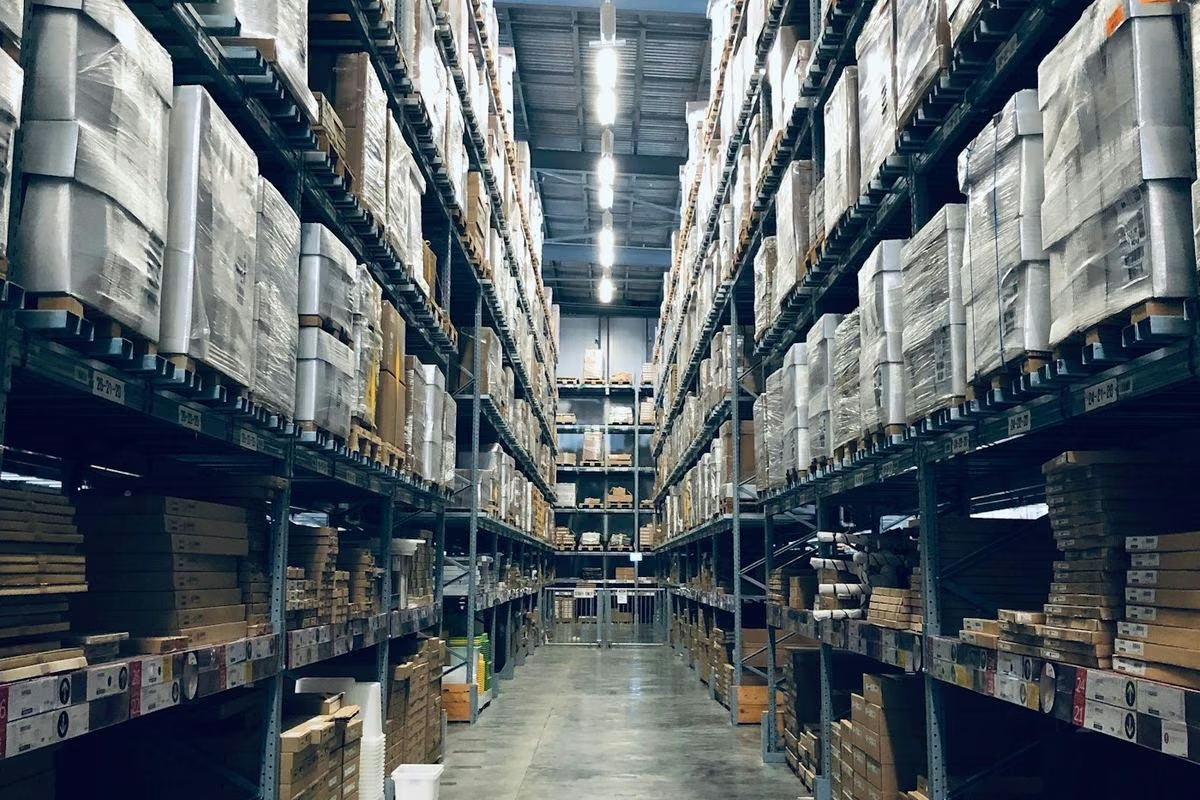
How to Run a 3PL Business on Odoo
Multi-client warehousing on Odoo: activity-based billing, storage methods, client portals — and how our 3PL module stops revenue leakage.
Read article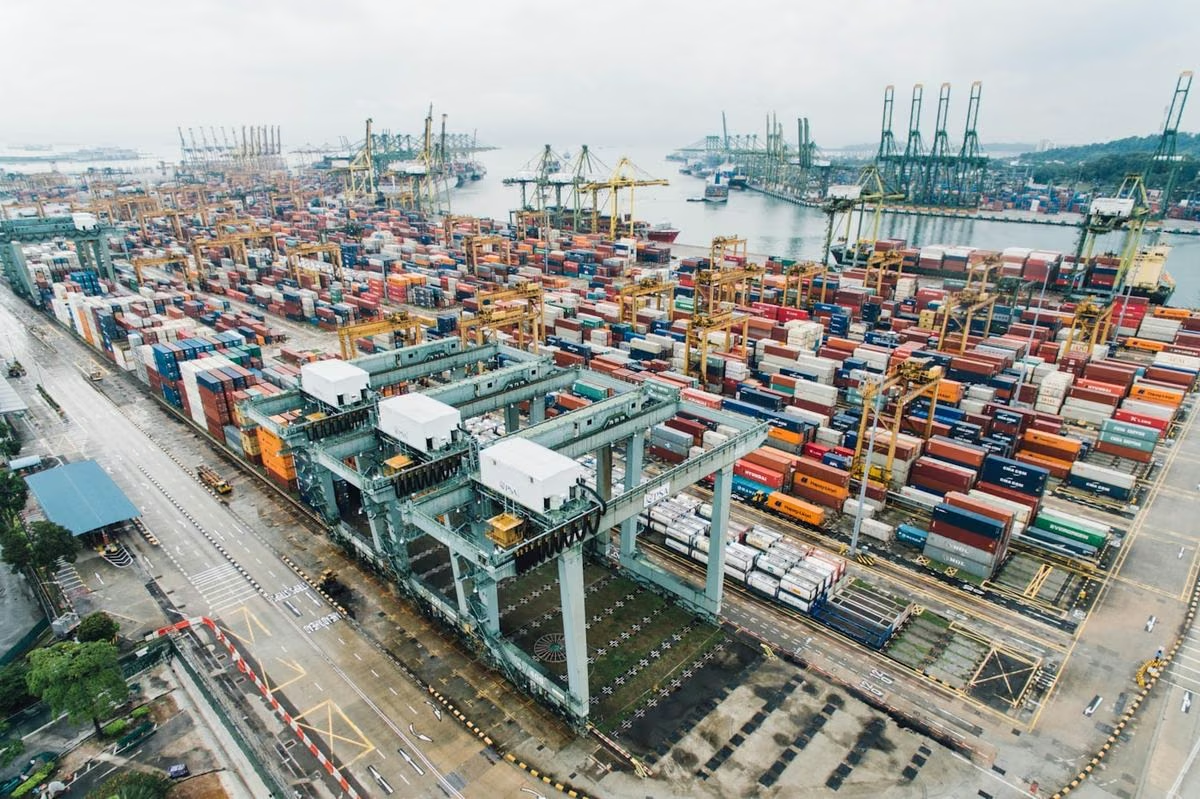
How to Run a Trading & Distribution Business on Odoo
Landed costs, multi-currency purchasing, and credit control — how traders and distributors turn quoted margin into margin they actually bank.
Read articleReady to build Odoo around your business?
Book a discovery call and talk to someone who has done this before.